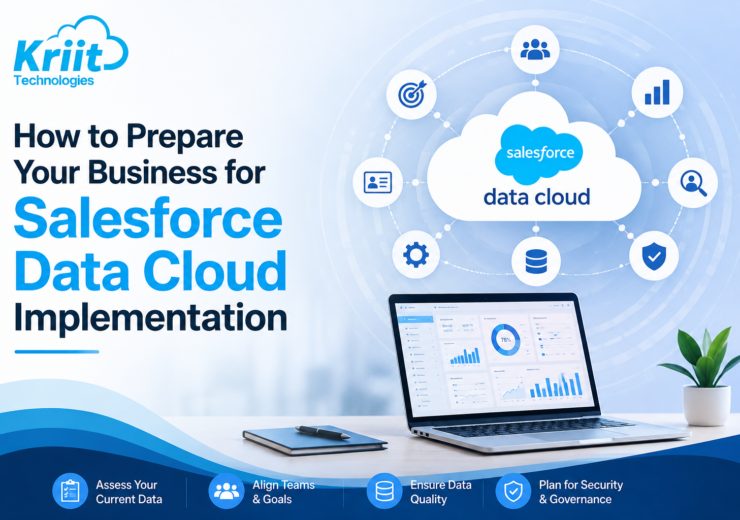
How to Prepare Your Business for Salesforce Data Cloud Implementation
Businesses today collect customer information from websites, CRM platforms, marketing tools, service systems, commerce platforms, and many other sources. The challenge is no longer simply collecting data. It is making that data usable, connected, and accessible when teams need it.
This is where Salesforce Data Cloud can make a significant difference. By bringing information together and creating a more unified view of customers, businesses can make better decisions, deliver more relevant experiences, and build stronger relationships.
However, implementing Salesforce Data Cloud is not something a business should approach without preparation. Data quality, integration requirements, business objectives, security, and internal processes all need to be considered before implementation begins.
Working with an experienced Salesforce Data Cloud Partner Germany can help businesses understand these requirements and create a structured implementation approach. Kriit Technologies helps businesses evaluate their Salesforce ecosystem, identify data requirements, and plan Salesforce solutions around their operational and customer experience goals.
What Is Salesforce Data Cloud?
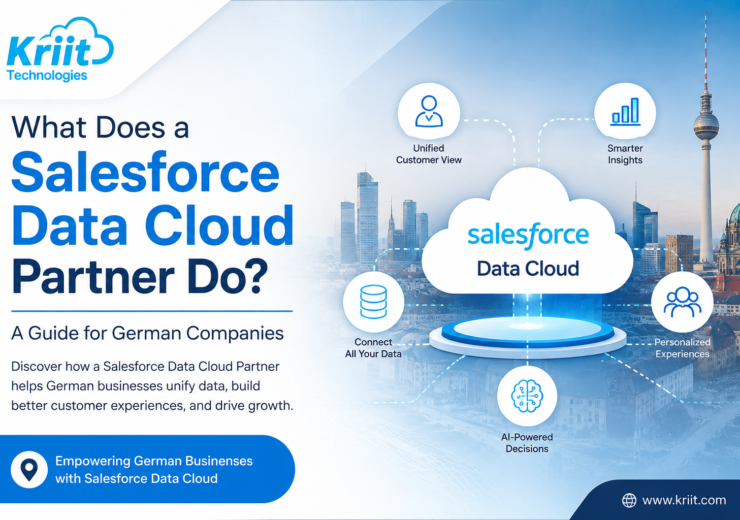
Salesforce Data Cloud is a data platform within the Salesforce ecosystem designed to bring together customer and business data from different sources. It can connect data across Salesforce applications as well as external systems, helping organizations create a more complete understanding of their customers.
Instead of keeping customer information isolated across different platforms, Data Cloud can help businesses bring relevant information together. This can be particularly valuable for organizations that have grown their technology stack over time and now manage customer data across multiple systems.
For example, a company may have customer information stored in Salesforce CRM, website interactions tracked through analytics platforms, purchase information in an e-commerce system, and support history in a service platform. Data Cloud can help connect these data points to create a more comprehensive customer view.
Why Preparation Matters Before Salesforce Data Cloud Implementation
A successful Data Cloud implementation starts before the technical configuration begins.
Many businesses focus heavily on integrations and platform capabilities but overlook the condition of their existing data. If customer information is duplicated, incomplete, inconsistent, or stored in incompatible formats, implementation can become more complicated than expected.
Preparation gives your business an opportunity to understand what data is available, where it is stored, how it is being used, and what the organization actually wants to achieve with Data Cloud.
A clear preparation process can also reduce unnecessary implementation work and help ensure that the platform supports measurable business outcomes rather than becoming another technology investment without a defined purpose.
Start by Defining Your Business Objectives
Before discussing technical architecture, establish why your organization needs Salesforce Data Cloud.
Your objective could be creating a unified customer profile, improving marketing personalization, supporting sales teams with better customer insights, improving service experiences, or making customer data more accessible across departments.
Connect Data Cloud Goals With Business Outcomes
For example, instead of defining the goal as “implement Salesforce Data Cloud,” a business could define a more measurable objective such as improving customer segmentation for marketing campaigns.
Another organization may want sales representatives to have access to more complete customer information before contacting a prospect.
Having specific objectives makes it easier to determine which data sources, integrations, workflows, and capabilities are actually required.
Audit Your Existing Data Sources
One of the most important preparation steps is understanding where your business data currently exists.
Your organization may use Salesforce CRM, ERP software, marketing automation platforms, customer service applications, websites, mobile applications, e-commerce platforms, or other third-party systems.
Identify Which Data Is Actually Important
Not every data source needs to be connected to Data Cloud immediately.
Start by identifying the information that directly supports your business objectives. Customer identities, purchase history, engagement data, service interactions, lead activity, and product information may be important depending on your use case.
Creating a clear data inventory helps your implementation team understand what needs to be connected and what can remain outside the initial implementation scope.
Assess the Quality of Your Customer Data
Data quality can significantly affect the success of a Data Cloud project.
Businesses often discover duplicate customer records, outdated contact details, inconsistent naming conventions, incomplete profiles, and conflicting information across systems.
Identify Duplicate and Inconsistent Records
For example, the same customer may appear under slightly different names in the CRM and e- commerce system. Email addresses may also be formatted differently or associated with multiple records.
Before implementation, review these inconsistencies and determine how they should be handled. Better-quality source data can make the overall implementation more reliable and improve the usefulness of the customer profiles created through Data Cloud.
Review Your Salesforce Environment
If your business already uses Salesforce, review the current Salesforce setup before introducing Data Cloud.
Understand which Salesforce products are being used, how objects and fields are structured, what integrations already exist, and where customer information is currently stored.
This assessment can help identify potential dependencies and prevent unnecessary duplication of data or functionality.
For businesses working with an experienced Salesforce Data Cloud Partner Germany, this stage is also an opportunity to review the existing Salesforce architecture and identify areas that may require adjustment before implementation.
Determine Your Integration Requirements
Data Cloud becomes more valuable when it can work with the systems that contain important business information.
Your implementation team should therefore identify the systems that need to exchange data with Salesforce Data Cloud.
Consider Both Salesforce and External Systems
Some organizations may primarily need Salesforce integrations, while others may have significant amounts of data outside the Salesforce ecosystem.
Understanding these requirements early allows the implementation team to assess integration methods, data structures, synchronization requirements, and potential technical limitations.
It also helps businesses create a realistic implementation timeline.
Establish Data Governance and Security Requirements
Customer data needs to be managed responsibly, particularly when organizations operate across different markets and regulatory environments.
Connecting these systems properly can give Salesforce a more complete view of the customer.
Before implementation, determine who should have access to different types of data, how information should be managed, and which internal security policies need to be followed.
Define Data Ownership
Different departments may be responsible for different types of information. Marketing may manage campaign data, sales may manage opportunity information, and customer service may manage support interactions.
Clearly defining ownership can make it easier to maintain data accuracy and establish accountability after implementation.
For organizations operating in Germany or across the European Union, data privacy and governance should also be considered carefully as part of the implementation planning process.
Prepare Your Teams for the Change
Technology implementation is not only a technical project. Employees need to understand how the new system will affect their daily work.
Sales, marketing, customer service, and other teams may interact with customer information differently once Data Cloud becomes part of the organization’s data architecture.
Training and communication should therefore be included in the implementation plan from the beginning.
Explain the Business Value to Employees
When employees understand why the organization is implementing Data Cloud and how it can make their work easier, adoption is more likely to be successful.
For example, sales teams may benefit from having more complete customer information, while marketing teams may be able to create more relevant audiences and campaigns.
Choose the Right Implementation Partner
Choosing the right implementation partner can have a major impact on the outcome of your Salesforce Data Cloud project.
A suitable partner should understand both the Salesforce platform and the business problems that the organization is trying to solve.
Kriit Technologies works with businesses to understand their Salesforce requirements and develop solutions that align technology with business objectives. The right approach should focus on more than simply connecting systems. It should consider data quality, architecture, user requirements, scalability, security, and long-term business value.
When evaluating a Salesforce Data Cloud Partner Germany for Salesforce Data Cloud Partner Germany, businesses should look for relevant Salesforce expertise, implementation experience, understanding of data integration, and the ability to provide ongoing guidance after deployment.
Create a Phased Implementation Strategy
Not every organization needs to connect every data source on day one.
A phased approach can make the implementation more manageable. Start with the data sources and use cases that provide the greatest business value, validate the results, and then expand the Data Cloud environment.
Start With a High-Value Use Case
For example, a business could initially focus on creating unified customer profiles using CRM and purchase data. Once that foundation is working effectively, additional marketing, service, website, or engagement data can be introduced.
This approach can help reduce implementation complexity while giving stakeholders an opportunity to see measurable results.
Define How Success Will Be Measured
Before implementation starts, decide how you will determine whether the project has delivered value.
The right metrics will depend on the business objectives. Some organizations may measure improvements in marketing engagement, customer retention, sales productivity, data quality, or customer service efficiency.
Without clear measurement criteria, it becomes difficult to determine whether Data Cloud is delivering the expected business benefits.
Prepare for Continuous Optimization
Salesforce Data Cloud implementation should not be viewed as a one-time project that ends immediately after deployment.
As your business grows, new data sources, customer journeys, applications, and business requirements may emerge. Your Data Cloud environment should evolve alongside these changes.
Regularly reviewing data quality, integrations, governance, user adoption, and business performance can help your organization get more value from the platform over time.
How Kriit Technologies Can Help With Salesforce Data Cloud
Preparing for Data Cloud implementation requires a combination of business understanding, Salesforce expertise, data strategy, and technical planning.
Kriit Technologies helps businesses approach Salesforce projects with a focus on practical business outcomes. From understanding existing Salesforce environments to evaluating data requirements and planning integrations, a structured approach can make the implementation journey more predictable.
If your organization is planning to adopt Salesforce Data Cloud in Germany, working with a capable Salesforce Data Cloud Partner Germany can help you establish the right foundation before implementation begins.
Frequently Asked Questions
1. What should a business do before implementing Salesforce Data Cloud?
A business should define its objectives, audit existing data sources, assess data quality, review its Salesforce environment, identify integration requirements, establish governance policies, and prepare employees for the implementation.
2. Why is data quality important for Salesforce Data Cloud?
Data Cloud relies on information from multiple sources. Duplicate, incomplete, or inconsistent records can affect the quality of unified customer profiles and reduce the value businesses get from their data.
3. Do I need a Salesforce Data Cloud Partner for implementation?
Businesses can have different levels of Salesforce expertise internally. However, an experienced implementation partner can provide specialist knowledge around data architecture, integration, configuration, governance, and implementation strategy, particularly for complex environments.
4. How long does Salesforce Data Cloud implementation take?
The timeline varies depending on factors such as the number of data sources, integration complexity, data quality, business requirements, existing Salesforce infrastructure, and project scope. A phased implementation can help organizations manage larger projects more effectively.
5. How can I choose the right Salesforce Data Cloud Partner in Germany?
Look for a partner with relevant Salesforce expertise, experience with data integration, an understanding of your industry and business requirements, strong implementation processes, and the ability to provide ongoing support and optimization.
Conclusion
Salesforce Data Cloud can help businesses turn fragmented customer information into a more connected and useful data environment. But the success of the platform depends heavily on what happens before implementation begins.
By defining clear objectives, auditing existing data, improving data quality, understanding integration requirements, establishing governance, preparing employees, and choosing the right implementation approach, businesses can create a stronger foundation for long-term success.
For organizations looking for a Salesforce Data Cloud Partner Germany, Kriit Technologies can help plan a Salesforce Data Cloud journey around business requirements, data needs, and long- term growth.