Salesforce Consultant for Hire How AI Is Changing CRM Implementation

Salesforce has become much more than a traditional customer relationship management platform. With AI becoming a bigger part of sales, marketing, customer service, and business operations, companies are now looking at Salesforce implementation from a different perspective. It is no longer just about setting up objects, workflows, dashboards, and integrations. Businesses also want their CRM to help teams work smarter, automate repetitive tasks, and make better decisions using customer data.
This is where the role of a Salesforce consultant is changing.
Businesses searching for a Salesforce Consultant for Hire in India are increasingly looking for professionals who understand both Salesforce and emerging AI capabilities. A consultant today needs to think beyond configuration and consider how CRM data, automation, analytics, integrations, and AI can work together to create measurable business value.
How AI Is Changing Salesforce CRM Implementation
Traditionally, Salesforce implementation focused heavily on understanding business processes and translating them into CRM functionality. Consultants would configure Salesforce, migrate data, create automation, build reports, and integrate other business applications.
AI is adding another layer to this process.
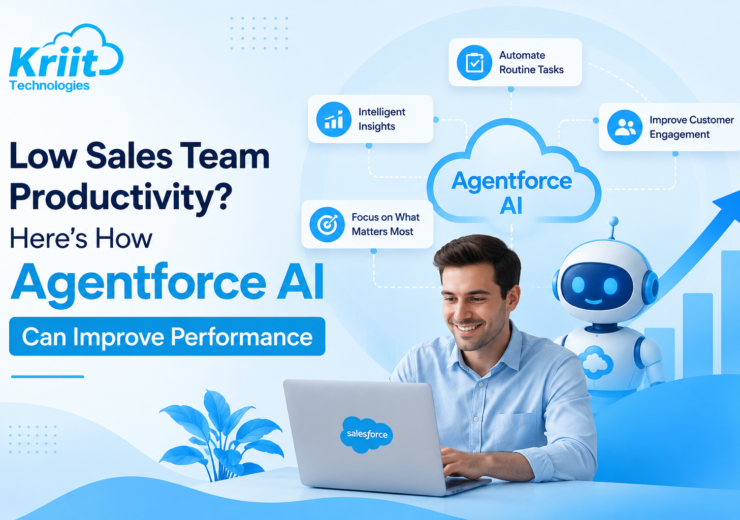
Modern Salesforce implementations can use AI to help sales teams identify promising leads, assist customer service representatives, summarize customer interactions, generate content, and surface useful information from large amounts of business data.
This means AI cannot simply be added after the CRM has been implemented. The way data is structured, governed, accessed, and maintained during implementation can directly affect how useful AI becomes later.
CRM Data Quality Has Become More Important
AI is only as useful as the information available to it. If customer records are incomplete, duplicated, outdated, or poorly structured, AI-generated insights may not provide the expected business value.
A Salesforce consultant therefore needs to pay close attention to data architecture and data quality during implementation. This can include reviewing existing customer data, defining appropriate fields, establishing data standards, managing duplicates, and creating processes that encourage teams to maintain accurate records.
For businesses planning an AI-enabled Salesforce environment, these fundamentals are just as important as selecting the right AI features.
From CRM Automation to Intelligent Automation
Automation has been part of Salesforce for years, but AI is changing what automation can accomplish.
Traditional automation generally follows predefined rules. For example, when a new lead enters Salesforce, a workflow may assign it to a sales representative or trigger a notification.
AI-powered CRM capabilities can add more context to these processes. Instead of simply following a fixed rule, AI can help sales teams understand customer information, summarize interactions, identify patterns, and prioritize actions.
AI Can Reduce Repetitive Sales Tasks
Sales representatives often spend considerable time updating CRM records, preparing follow-up information, reviewing customer conversations, and searching for relevant account details.
With the right Salesforce configuration and AI capabilities, some of these activities can be streamlined.
The objective is not to remove the salesperson from the process. It is to reduce administrative work so that sales professionals can spend more time communicating with prospects and customers.
This is one of the reasons businesses are increasingly considering a Salesforce Consultant for Hire in India when planning their next CRM transformation.
The Role of a Salesforce Consultant Is Evolving
A Salesforce consultant is no longer simply someone who knows how to configure Salesforce.
The consultant increasingly acts as a bridge between business requirements, CRM architecture, data strategy, automation, integrations, and emerging AI capabilities.
A good consultant first needs to understand how a company actually operates. What does the sales process look like? Where are leads coming from? How is customer information currently stored? Which tasks are consuming employees’ time? Which systems need to exchange data with Salesforce?
Only after understanding these questions should technology decisions be made.
Business Strategy Should Come Before AI
It can be tempting for businesses to implement AI simply because it is currently receiving significant attention. However, AI should solve a business problem rather than become another technology project without a clear purpose.
A Salesforce consultant can help identify practical use cases where AI and automation could deliver value.
For one company, that might mean improving lead prioritization. For another, it could involve helping service teams access customer information faster. A larger organization may need a combination of CRM automation, data integration, analytics, and AI capabilities.
The implementation should therefore be designed around business objectives rather than around technology trends alone.
Why Businesses Need Expert Salesforce Consulting
Salesforce is a highly flexible platform, but that flexibility can also make implementation complicated. Poorly planned customizations, unnecessary automation, inconsistent data structures, and weak integration strategies can create problems that become expensive to fix later.
An experienced consultant can help businesses make architectural decisions before those problems occur.
This is particularly important when AI is part of the roadmap. AI-related capabilities may depend on reliable data, appropriate permissions, well-designed processes, and suitable integrations.
Integration Is Becoming a Bigger Part of CRM Projects
Most businesses do not operate using Salesforce alone. They may have marketing platforms, ERP systems, communication tools, customer support applications, payment systems, websites, and other business software.
Connecting these systems properly can give Salesforce a more complete view of the customer.
A consultant can assess which systems need integration, determine how information should move between platforms, and help establish a reliable data flow. This becomes especially valuable when AI needs access to relevant customer information to provide useful context.
How Kriit Technologies Approaches Salesforce Consulting
At Kriit Technologies, Salesforce consulting is approached from a business-first perspective. The focus is not simply on implementing features but on understanding what the organization needs from its CRM.
For companies considering a Salesforce Consultant for Hire in India, the right engagement should begin with understanding existing processes, identifying operational challenges, reviewing the current Salesforce environment, and defining clear business objectives.
From there, the Salesforce environment can be planned around the organization's requirements, whether that involves implementation, customization, automation, integrations, data management, or preparing the CRM for AI-powered capabilities.
The exact approach will naturally vary from one business to another because no two Salesforce environments are identical.
What Should You Expect From a Modern Salesforce Consultant?
A modern Salesforce consultant should understand both the technical and business sides of CRM.
Technical knowledge remains essential, including Salesforce architecture, configuration, automation, data migration, integrations, security, and customization. At the same time, consultants need to understand how those technical decisions affect users and business processes.
AI adds another important consideration.
Consultants should be able to identify realistic AI opportunities, understand data requirements, consider security and governance, and ensure that AI capabilities fit naturally into existing workflows.
Implementation Should Be Designed for the Future
A Salesforce implementation should not only address today's requirements. It should also provide a foundation that can evolve as the organization grows.
Businesses may add new teams, markets, products, applications, integrations, and AI capabilities over time. A scalable CRM architecture makes it easier to accommodate those changes without repeatedly rebuilding the entire system.
This is why choosing the right consulting expertise can have a long-term impact on the value a company gets from Salesforce.
Is AI Replacing Salesforce Consultants?
AI is changing the work Salesforce consultants perform, but it is not eliminating the need for experienced consultants.
In fact, the opposite may be true for businesses that want to use AI effectively. AI can assist with many tasks, but businesses still need people who understand their processes, data, technology landscape, compliance requirements, and long-term objectives.
A consultant can provide the human judgment required to decide where AI makes sense, where traditional automation is sufficient, and where a process may need to be redesigned altogether.
The future of Salesforce consulting is therefore likely to involve a combination of human expertise, automation, data intelligence, and AI.
Final Thoughts
AI is changing the way businesses think about Salesforce CRM implementation. The focus is moving from simply storing customer information toward creating connected, intelligent, and more efficient business processes.
For organizations planning a new implementation or looking to improve an existing Salesforce environment, bringing in the right consulting expertise can make the difference between simply deploying Salesforce and building a CRM that supports long-term business growth.
If your business is looking for a Salesforce Consultant for Hire in India, Kriit Technologies can help evaluate your Salesforce requirements and develop an approach aligned with your business processes, data, automation, integration, and future AI goals.
Frequently Asked Questions
1. What does a Salesforce consultant do?
A Salesforce consultant helps businesses plan, implement, customize, optimize, and integrate Salesforce according to their business requirements. Their responsibilities can include CRM strategy, configuration, automation, data migration, integrations, user adoption, and ongoing optimization.
2. Why is AI becoming important in Salesforce implementation?
AI can help businesses automate repetitive activities, analyze customer information, summarize interactions, support sales and service teams, and provide more intelligent insights. However, successful AI adoption depends heavily on having well-structured and reliable CRM data.
3. How do I choose a Salesforce consultant for my business?
Look for a consultant or consulting company with relevant Salesforce experience, a clear understanding of your industry and business processes, strong technical expertise, and experience with integrations, data, automation, and modern AI capabilities. It is also useful to review their previous implementation experience and approach to project delivery.
4. Is hiring a Salesforce consultant better than managing Salesforce internally?
It depends on the organization's requirements and internal expertise. A consultant can provide specialized knowledge for implementation, complex customization, integrations, optimization, or transformation projects without requiring a business to build all of that expertise internally.
5. Can a Salesforce consultant help prepare my CRM for AI?
Yes. A consultant can review data quality, CRM architecture, automation, integrations, security, and business processes to identify what needs to be improved before introducing AI capabilities. This preparation can help ensure that AI is built on a reliable and well-managed Salesforce environment.